VALLETTA, MALTA—Analysis of deep grooves in the bedrock on the islands of the Maltese archipelago suggests that they are ruts made by the wheels of carts over thousands of years, Gizmodo reports. It had been suggested that the tracks dated to between 5200 and 750 B.C. and were related to quarrying activity. Joel Grima of the University of Malta said that similar cart ruts can be found in urban areas of Europe, Asia, and North America.
Archaeology Magazine (AIA) · Jessica Esther Saraceni · Oct 22
NASA Invites Media to 2026 von Braun Space Exploration Symposium
Members of the media are invited to join NASA at the 2026 von Braun Space Exploration Symposium from Monday, Oct. 28, at the University of Alabama in Huntsville. This year’s symposium is focused on humanity’s return to the Moon, sustainable lunar infrastructure, advanced space propulsion, and the evolving space workforce.
Meta’s AI could still scrape news sites, legal experts say
Meta has tweaked its business terms to remove language suggesting that it could freely train its AI models on news sites, like The Verge — but legal experts say these changes aren’t enough to address their concerns. “This does nothing to restrict the ‘associated with your products or services’ [language] that would let Meta scrape entire sites,” James Grimmelmann, a professor of digital and information law at Cornell Law School, tells Nieman Lab.
Did Penguin Hunters Occupy a Campsite Off Patagonia’s Coast?
CADIZ, SPAIN—IFL Science reports that a team of researchers led by Nicolas C. Ciarlo of the University of Cadiz has discovered fragments of a nineteenth-century ship and traces of a camp that may have been left behind by Luis Piedra Buena and his crew. In 1873, Piedra Buena attempted to cross the dangerous Strait of Le Maire off the southern tip of South America in order to hunt penguins on the nearby Isla de los Estados.
Archaeology Magazine (AIA) · Jessica Esther Saraceni · Oct 22
Two sources, one subject: what does each one report?
A · NASA News
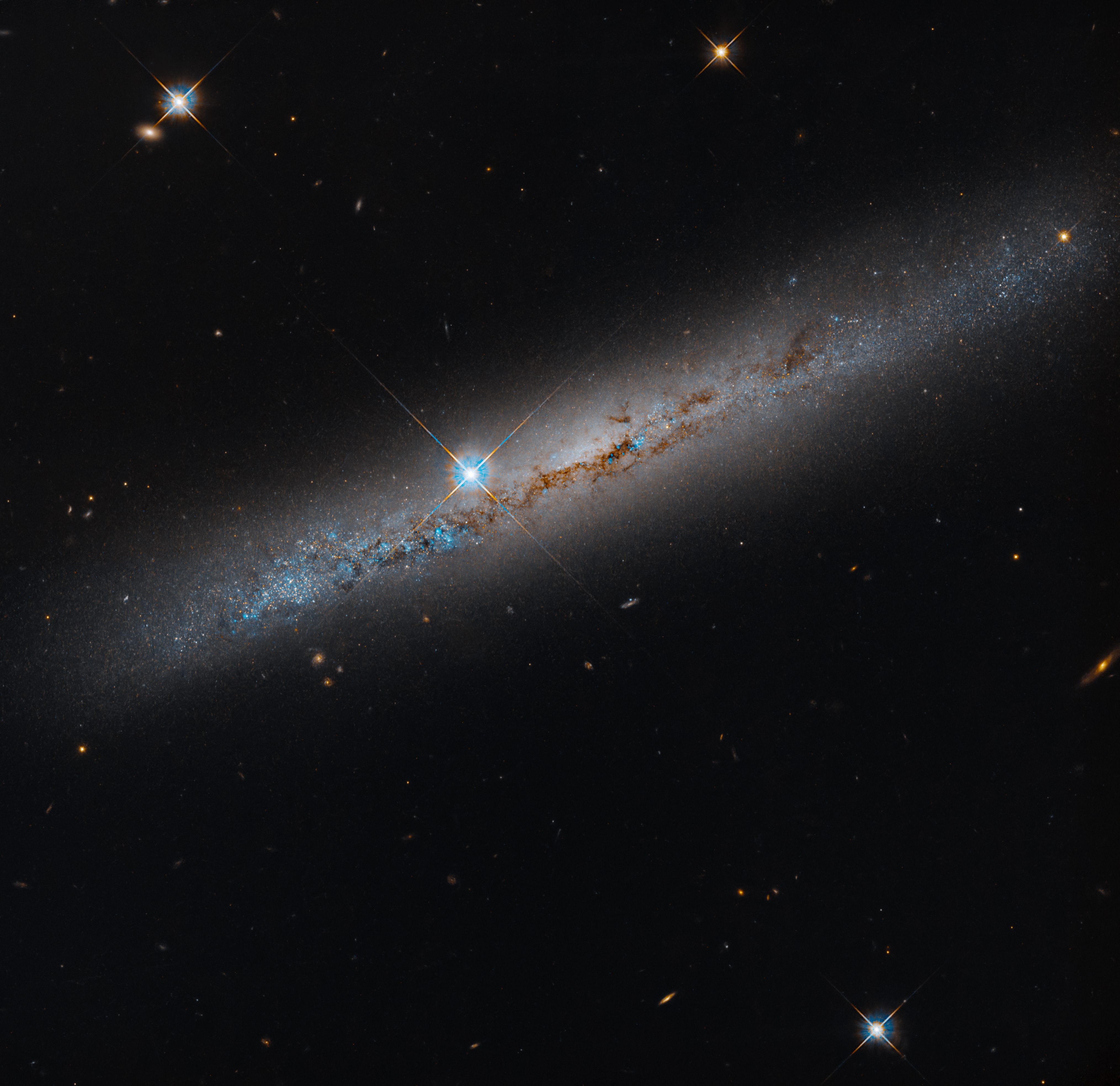
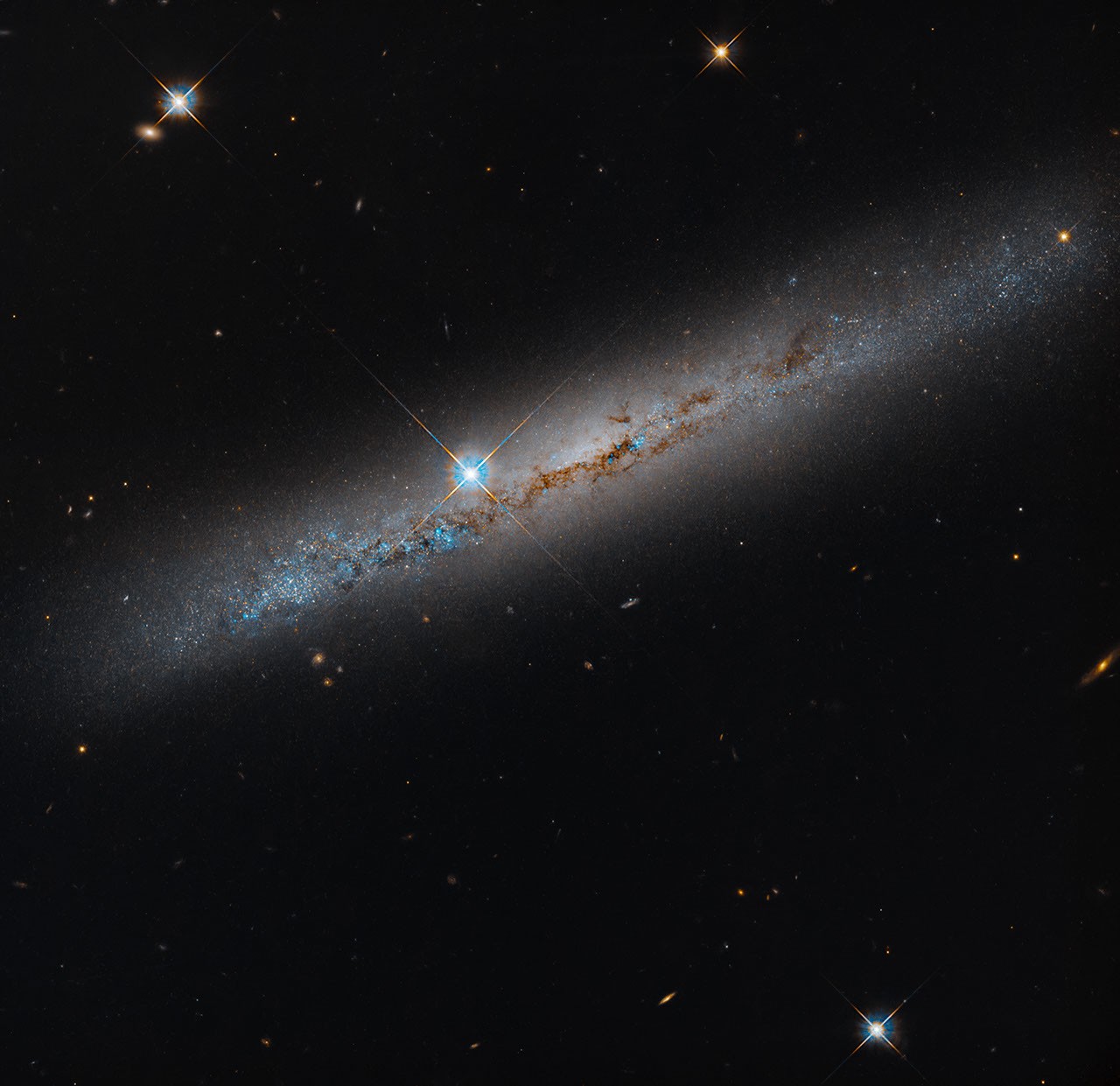
Spiral’s Edge
This NASA Hubble Space Telescope image released on Oct. 16, 2026, features the edge-on, intermediate spiral galaxy NGC 1827, located roughly 37 million light-years away in the constellation Columba, the Dove. Hubble captured the image as part of a survey looking at 260 satellite galaxies around 22 Milky Way-like host galaxies within a radius of about 32 million light-years from Earth.
Webb image reveals young stars brewing in a nebulous cauldron
In this Picture of the Month from the NASA/ESA James Webb Space Telescope, we visit a turbulent cauldron of star formation to see what is brewing inside dense clumps of gas. This is a star-forming region named LHA 120-N 159, or simply N159, located 161,000 light-years away in the Large Magellanic Cloud (LMC), one of the satellite galaxies orbiting the Milky Way galaxy.
NASA News reports: This NASA Hubble Space Telescope image released on Oct. Phys.org Space reports: In this Picture of the Month from the NASA/ESA James Webb Space Telescope, we visit a turbulent cauldron of star formation to see what is brewing inside dense clumps of gas. The two reports share a subject but not a single event, so read them as two angles rather than one story. This review only restates what each source published. It does not add facts or opinions. Read both and decide for yourself.